





How We’re Doing – And Where We’re Heading
Valuable insights from our community
Earth's resources are finite. Even the fibers we wear are part of that conversation — their environmental impact stretches from raw material to end of life. 65% think TENCEL™ is worth searching for on the care label, while 62% feel it gives them the confidence to make more conscious choices when it comes to buying fashion.1
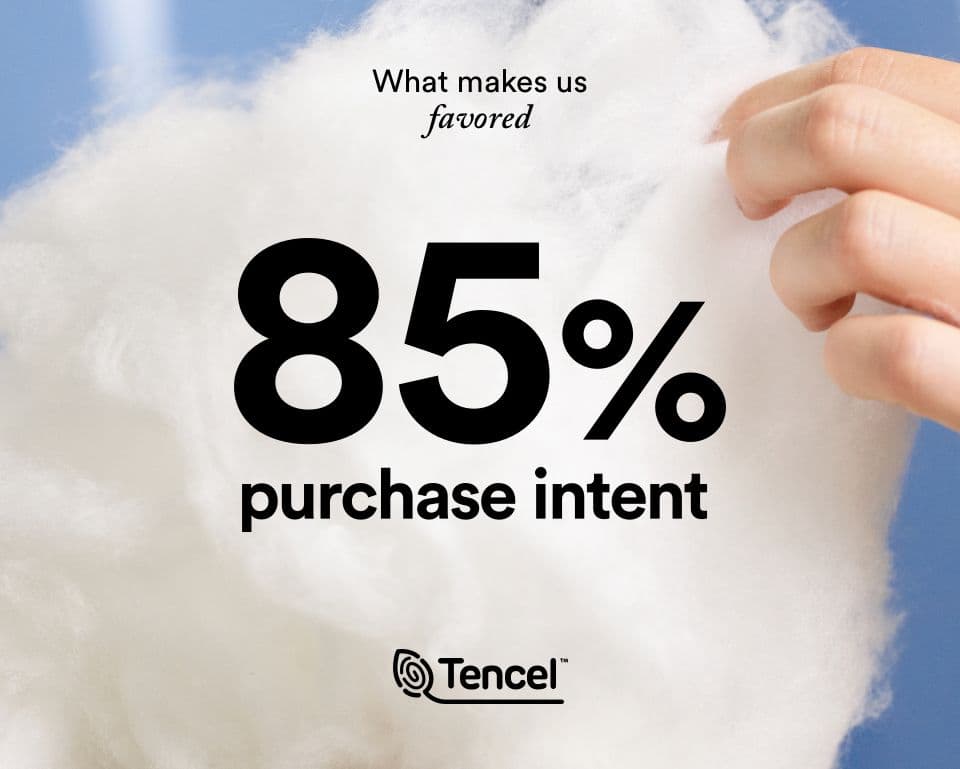
In our latest brand performance study, conducted by NielsenIQ, one thing is clear: people care deeply about the choices they make. The study found that TENCEL™ fibers are associated with attributes like "quality," "trustworthy," and "made from natural materials2" — confirming that our customers understand our mission. Eighty-five percent say they're more likely to buy clothes made with TENCEL™ fibers.
Source: NielsenIQ Hong Kong, Textile Global Report, 2024-2025
That means we're on the right track.
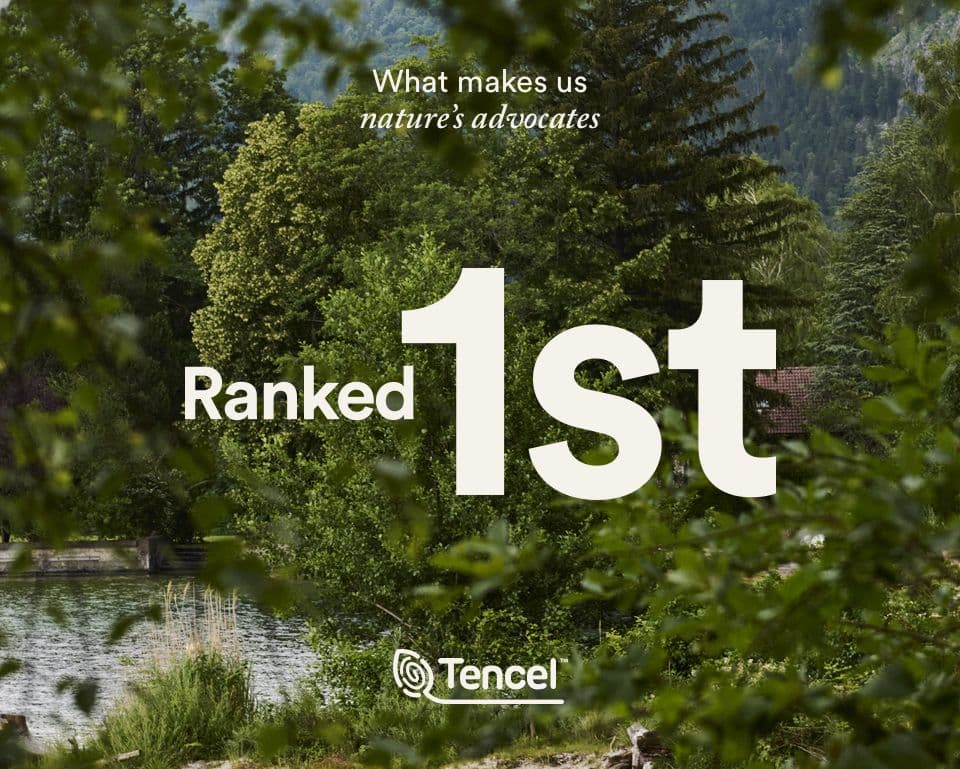
Our work has earned recognition: We are once again ranked #1 in the global Canopy Hot Button Ranking ("Dark Green" shirt)3 for our forestry-related practices, with all our wood sourced from certified or controlled origins. In 2025, CDP placed Lenzing — producer of TENCEL™ fibers — on the Climate A-list for the fourth consecutive year4.
Source: NielsenIQ Hong Kong, Textile Global Report, 2024-2025
Validation matters - but third-party recognition carries a second benefit: it builds trust.
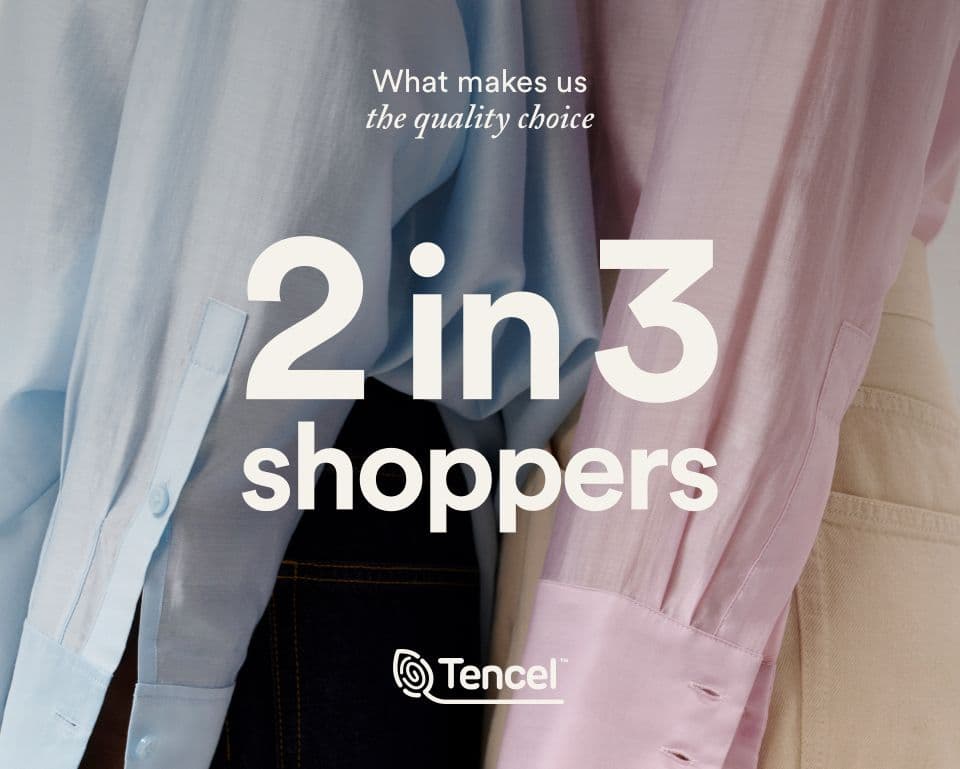
More than ever, customers are seeking quality and comfort — and they return to us, time and again. The survey found that more than 8 in 10 consumers familiar with TENCEL™ are more likely to buy clothes made with our fibers.
Source: NielsenIQ Hong Kong, Textile Global Report, 2024-2025
We hope that the level of consumer confidence gives fashion labels, household names, and aspiring brands around the world the conviction to choose TENCEL™.
But there is still work to do.
A challenge – and an opportunity
The fiber gap presents both a challenge and an opportunity.
The fiber gap refers to the global shortfall between the demand for textile fibers — such as cotton, polyester, wool and others — and the supply of sustainable or natural fibers available to meet that demand.
According to industry data from Textile Exchange, global fiber production continues to rise, while the scalable supply of lower-impact natural fibers remains constrained.
Because natural fibers alone cannot meet growing demand, manufacturers continue to rely heavily on petroleum-based synthetics such as polyester, nylon and acrylic.
Closing this gap requires realism about scale.
In the short to medium term (now–2035), responsibly produced man-made cellulosic fibers (MMCFs), including TENCEL™ Lyocell and Modal are produced from wood 5, a biomass feedstock that can be regenerated through forest growth and reforestation, unlike polyester, which is produced from fossil resources.
If the goal is rapid decarbonization and meaningful volume replacement, MMCFs are the bridge solution.
At the same time, next-generation innovators — including LENZING partners such as TreeToTextile and Circ — are pioneering solutions that could reshape the industry over the long term. These technologies have the potential to disrupt conventional MMCF production, reduce reliance on forestry and enable true textile circularity.
Jemma Breen, Director of Global Brands & Retailers at Lenzing Group
However, most next-generation innovators are still in pilot or early commercial phases. They are producing limited volumes and often remain dependent on brand partnerships. While highly promising, they are not yet capable of replacing tens of millions of tons of polyester demand. To scale, they will require significant capital investment, infrastructure buildout, policy support and cost reductions.
If the goal is systemic circular transformation, next-generation materials are the future bet.
Most experts agree that closing the fiber gap will require a portfolio approach — scaling MMCFs responsibly today while accelerating next-generation innovation for tomorrow.
Discover how we’re driving circularity – read more in Lenzing latest Sustainability Report.

The Rise of Natural Performance
“The sportswear sector is still largely dominated by synthetic materials, often reliant on harmful chemicals. Now, next generation companies advance innovative, sustainable materials without compromising technical benefits.” – Nicole Schram, Head of Global Technical Department, Lenzing
One area where this challenge becomes especially visible is activewear. Performance apparel has long depended on petroleum-based synthetics such as polyester and nylon because of their moisture management, durability and stretch.
Yet consumers are increasingly looking for natural fiber offerings in this category, as awareness grows around the environmental footprint of petroleum-based textiles — and concerns about how synthetic fabrics interact with skin, especially during high-intensity wear.
This is where TENCEL™ fibers — particularly Lyocell — offer a meaningful solution.
Derived from certified or controlled wood sources5 and produced in a closed-loop process, TENCEL™ Lyocell fibers provide breathability, moisture absorption, softness and skin comfort while reducing reliance on fossil-based materials due to the renewability of wood being used..
When blended with performance yarns, they enable brands to create activewear that balances function, comfort and environmental responsibility — helping shift one of the most synthetic-dependent categories toward more bio-based and renewable5 material inputs without compromising performance expectations.
Our Community Makes Us
Progress does not happen in isolation.
Our community makes us — from the people who design, weave and spin our fibers, to the researchers and innovators who collaborate with us on next-generation solutions, to the brands that bring our materials to life, and the consumers who choose to check the label.
Every step in the value chain matters.
Every partnership strengthens the system.
Every informed choice moves the industry forward.
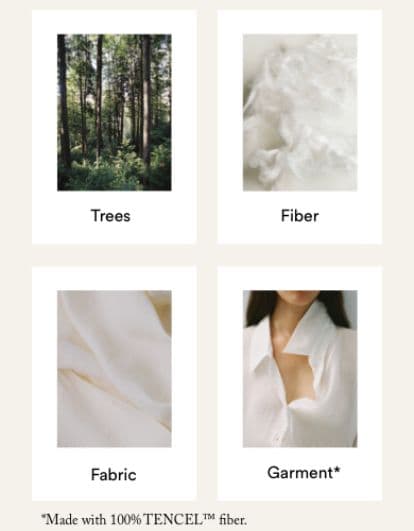
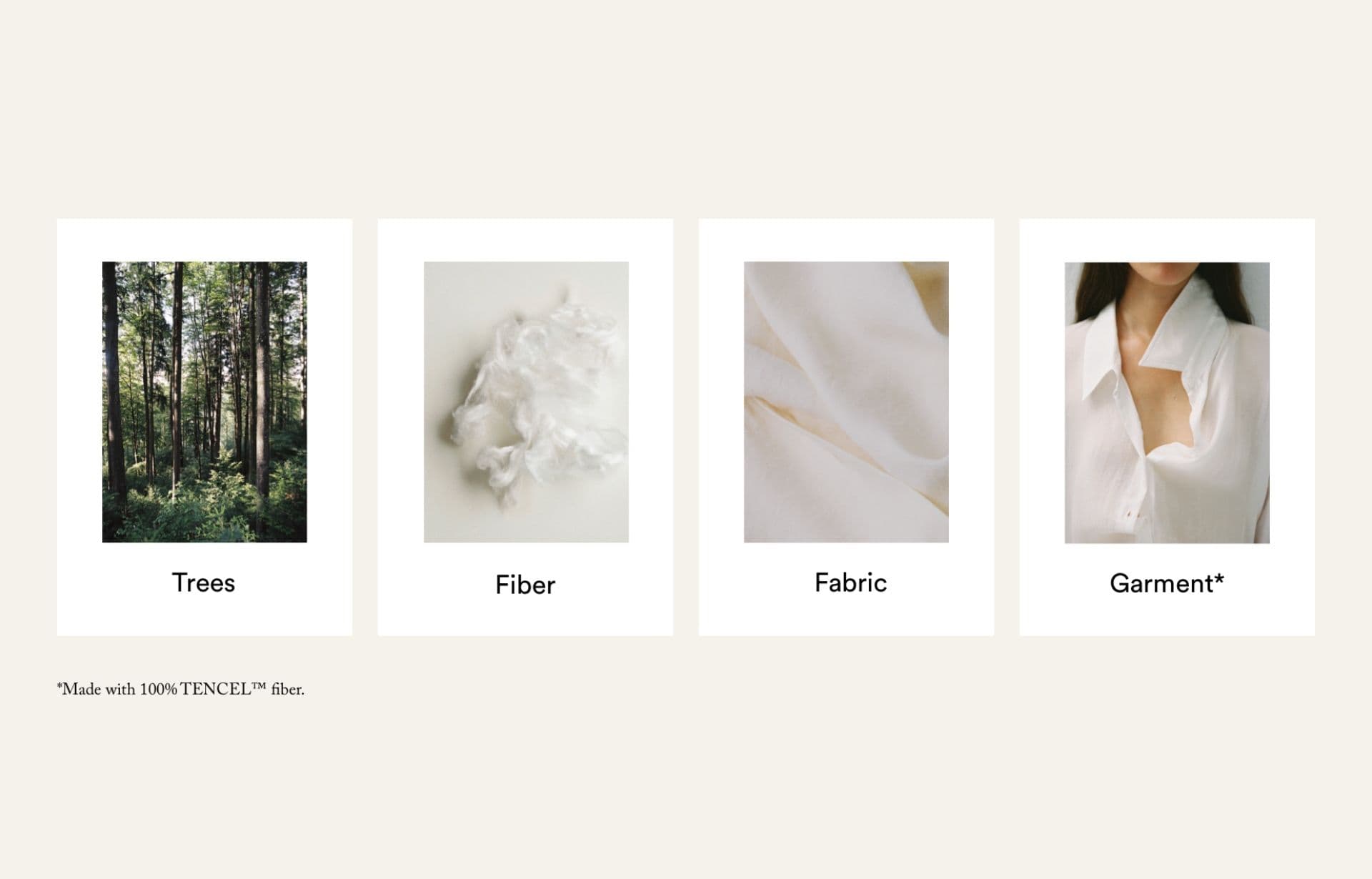
While we are continuously improving the performance and reducing our footprints through closed-loop processes, use of low carbon fuels and concrete targets, we hope our community continues to grow with us.6
1 Source: NielsenIQ, Textile Global Report, 2024-2025. The study surveyed 5,500 textile purchasers in 9 countries (China, Korea, Japan, India, Indonesia, Turkey, United States, United Kingdom, Germany)
2 The wood used as raw material for all TENCEL™ Lyocell and Modal fibers is sourced from certified (FSC® (FSC-C041246) or PEFC (PEFC/06-33-92) certification) or controlled wood sources.
3 Source: https://canopyplanet.org/tools-and-resources/hot-button-report
4 CDP.net, 2025: www.cdp.net/en/disclosure-2025
5 FSC (FSC-C041246) or PEFC (PEFC/06-33-92) certification.
6 Lenzing was the first cellulosic fiber producer to set concrete science-based targets aiming for a reduction of greenhouse gas emissions: www.lenzing.com/people-planet/decarbonization/